Dec 12, 2025
Unveiling the Power of QR Codes on Customized Vehicles
Table of Contents
The Challenges Vehicle Owners Face
How QR Codes Solve These Problems?
How to Implement QR Codes on Vehicles?
Updating content dynamically for ongoing modifications or restorations
Elevate Your Vehicle's Story with MyShowCode's Curated QR Codes
Your car carries a story - restorations, rare parts, proud craftsmanship. Yet at shows and online, that story often fades into the crowd. Traditional placards, paper records, and spoken explanations feel outdated, fragmentary, and unreliable.
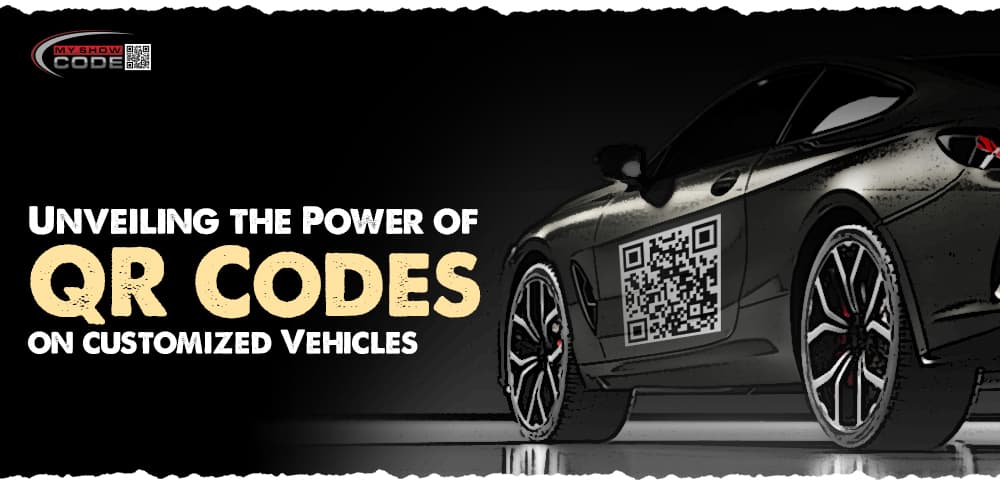
A smart QR Code on customized Vehicles turns curiosity into an instant digital experience. A quick S=scan and viewers access photos, service logs, restoration timelines, and proof of authenticity.
In this blog, you will find clear steps to create a polished digital vehicle profile, placement and design tips for effective scans, plus some best practices. Moreover, you will learn the challenges that car owners, collectors, and show participants face whenever they try to reveal a vehicle's true identity.
Read on if you want your car's history to be seen, believed, and shared.
The Challenges Vehicle Owners Face
Sharing a vehicle's story sounds simple until you try to present every detail clearly. Modern vehicle owners are struggling to communicate history, authenticity, and upgrades in a way that truly engages people.
We have jotted down below the challenges that you might be experiencing:
1. Sharing a vehicle's story often feels incomplete and frustrating
While explaining the build journey behind a classic or custom car, the details rarely land the way you intend. People see the final look, yes. However, they miss the hours of labor and the rare parts sourced. Nevertheless, sharing the car's restoration phases defines its identity.
Without strong tools to communicate that journey, your vehicle's narrative gets reduced to a few surface-level comments. The true value, therefore, gets underappreciated.
2. Traditional displays fail to hold attention in crowded environments
Paper spec sheets, laminated cards, and printed folders sit quietly while people walk past without engaging. Audiences want information that feels interactive, quick, and trustworthy, and paper doesn't deliver that experience.
As a result, your car ends up competing in a noisy environment with tools that do not meet modern expectations.
3. Proving authenticity becomes draining for sellers and collectors
When you are dealing with rare models, limited editions, or decades-old classics, establishing credibility is a constant battle. Prospective buyers may question service records, ownership history, or upgrades.
You spend time explaining the same details over and over. It's a clear lack of a streamlined way to offer instant verification that builds confidence.
4. Car show interactions often rely on repeating the same information
Answering the same questions multiple times can be mentally tiring. Visitors are curious, yet there is no simple way for them to explore everything independently.
Without a smoother system to present details, you end up juggling conversations rather than enjoying the event.
5. Even detailed documentation becomes scattered or difficult to present
Photos sit in your phone, receipts stay in folders, and restoration proofs get misplaced. Organizing them takes effort, and presenting them in a way people actually want to consume becomes another challenge.
You know the story deserves better. Nevertheless, tools at hand rarely help. Many owners now look for smarter methods that outperform traditional approaches. QR codes on vehicles can finally fill that gap.
How QR Codes Solve These Problems?
A digital vehicle profile QR code acts as a bridge between your physical vehicle and its digital story. When someone scans it with a phone, they instantly reach an online profile filled with photos, records, and a timeline. All this organized information can bring your car's journey to life.
1. Instant access to digital vehicle profiles
A quick scan gives viewers a comprehensive view of your car's background, specs, and milestones. You don't need to explain everything again and again. It transforms casual interest into meaningful engagement and keeps your story accessible at all times.
2. Easy updates for mods, restorations, and new milestones
As you refine your build, add upgrades, or complete restoration stages, updating the digital page is simple.
You never need to reprint displays or re-explain past work. People always see your most current progress, which enhances clarity and pride.
3. Builds trust for buyers and enhances show engagement
Transparency is powerful, and digital records offer a clear view of maintenance, documentation, and ownership history.
Buyers feel more confident, and event visitors enjoy exploring details through interactive elements. Overall, it creates deeper conversations and stronger appreciation.
4. Works for all vehicle types - vintage, exotic, or custom builds
Every category benefits from scannable storytelling. Classic restorations gain historical depth, performance builds showcase technical upgrades, and high-value models strengthen credibility.
The experience feels natural across custom QR codes for cars, adding a polished digital identity. At the same time, it also opens the door to authentic digital car storytelling.
How to Implement QR Codes on Vehicles?
As a unique vehicle owner, you definitely want a system that feels effortless yet professional. Your car's story should be available the moment someone stops, scans, and wants to learn more.
Here are some clear, action-ready steps for creating a polished digital profile. Also, learn how to put a scannable identity on your vehicle that people actually use.
Steps to create a digital vehicle profile QR code
These are the steps to create a unique QR code profile for your vehicle:
1. Subscribe - Choose a service plan that fits your needs. Then register an account and verify your contact details to manage multiple vehicle profiles securely.
2. Enter Car Details - Add make, model, year, VIN, restoration timeline, photos, and certificates to form a rich car profile QR code.
3. Choose Template - Pick a layout that highlights photos, timeline, and documents. After that, select branding accents and menu sections for clear, mobile-first navigation.
4. Get a Customized QR - Generate a unique, high-resolution QR code linked to your profile and test the scan on several phones. Lastly, download sticker files or printing instructions.
Placement tips
Take a look at how to add a QR code sticker to a car:
1. Place the sticker near the passenger-side window or on a display easel at shows. In this way, people can scan without leaning over the hood or crowding the driver's area.
2. We suggest avoiding curved bodywork that distorts the code. Flat surfaces, such as windscreen corners or a removable display panel, offer the most reliable scan performance.
3. Use a temporary stand or freestanding plaque when the vehicle is moving or parked in public. The code will become visible and no longer obscured by reflections.
4. Protect the sticker with a transparent lamination for outdoor use. It prevents peeling, fading, and water damage while maintaining high contrast for easy scanning.
5. Consult event rules before permanent placement. Sometimes organizers prefer placards over window stickers, and you can pair the two for broad exposure.
Design tips
Take a look at our proven brand-consistent design tips below:
1. Keep the QR size large enough for reliable scanning at typical event distances. You may aim for at least three inches square for handheld scans and larger for display viewing.
2. Our recommendation is to ensure high contrast. Dark code on a light background reads fastest; so avoid patterned backgrounds or busy imagery behind the code area.
3. Integrate a small logo or color accent outside the code frame. It will help you reinforce your car's identity without interfering with scanner readability.
4. Add a concise call to action near the code, such as "Scan for history and photos." This will prompt engagement and set expectations for what a scan reveals.
5. Offer alternate access by including a short, memorable URL or QR shortlink beneath the sticker. Users, whose phones struggle with scanning or who prefer typing, will benefit.
Updating content dynamically for ongoing modifications or restorations
You need to keep the online profile live and editable so that you can upload fresh photos or document new work. It will also help you add service notes as soon as a milestone is completed. With a single editable page, every scan reveals the latest state of the build.
Each interaction, therefore, becomes a current, trustworthy view of your vehicle's journey. A scanned vehicle story QR code becomes a living record rather than a static brochure.
Common Concerns & Best Practices
While QR codes on customized vehicles showcase your car's full story, there are some concerns to consider. We have outlined below some best practices to safeguard your privacy and ensure every scan is current and trustworthy.
• Privacy
You decide what belongs in public view. Share vehicle history, receipts, and restoration images, while avoiding personal contact details. Present ownership facts without revealing home address or sensitive ID numbers.
Keep your profile professional and focused on the car's provenance and technical story to protect both privacy and credibility.
• Mobile-friendly profiles
Make the digital page load quickly on phones and scale cleanly. Use compressed images, clear headings, and simple menus so someone scanning at a show can find photos, timelines, and documents in 3 taps or fewer. Fast access increases engagement and reduces bounce from impatient viewers.
• Scannability
Place the code on flat, low-glare surfaces and ensure the square is large enough for ordinary phones to read. High contrast between the code and background matters more than color accents.
Also, test scans under bright light and at night so viewers never struggle to access the profile.
• Regular updates
After every major mod, service, or restoration milestone, upload recent photos, receipts, and notes. Stamped timelines and dated entries build trust for buyers and collectors.
An active, updated page shows care and transparency, turning casual interest into serious inquiries - especially useful for clubs, sellers, and enthusiasts who value a living record.
Elevate Your Vehicle's Story with MyShowCode's Curated QR Codes
Every car has a story - be it a meticulously restored vintage model, a custom luxury build, or a high-performance modern ride. Nonetheless, sharing that journey has always been challenging.
A QR Code on customized Vehicles transforms how you present your car, turning curiosity into engagement. With a single scan, viewers access your vehicle's history, upgrades, and milestones, all updated in real time.
At MyShowCode, we empower you to create a polished, unique QR code that elevates your car's presence at shows, sales, or personal collections.
Take the next step. Sign up with us and create your digital vehicle profile today. Let every scan tell your car's complete story.
Recent Blogs


Follow Us
Web Design by Webskitters